



Eat & drink
What's on the menu
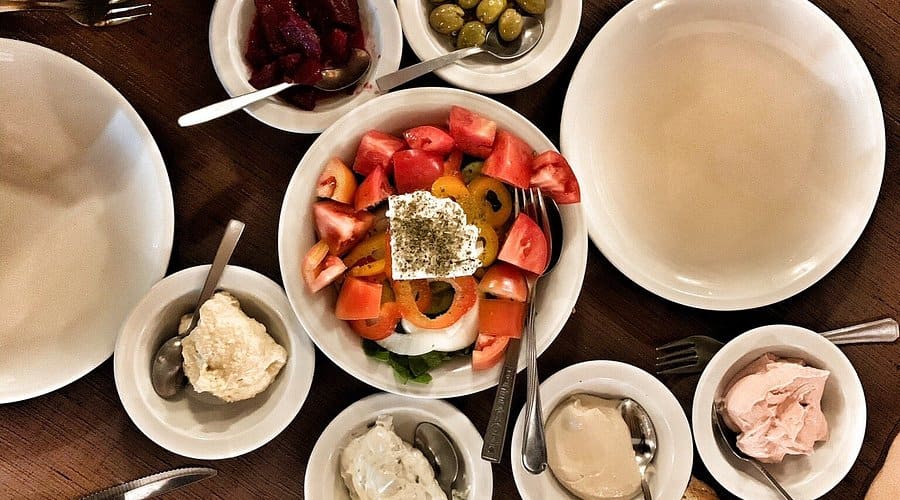
Cypriot menus are often translated loosely, or not at all. Here's what the words mean, what to order, and the one mistake almost everyone makes at their first meze.
On the grill and in the pot
- Mezeμεζές
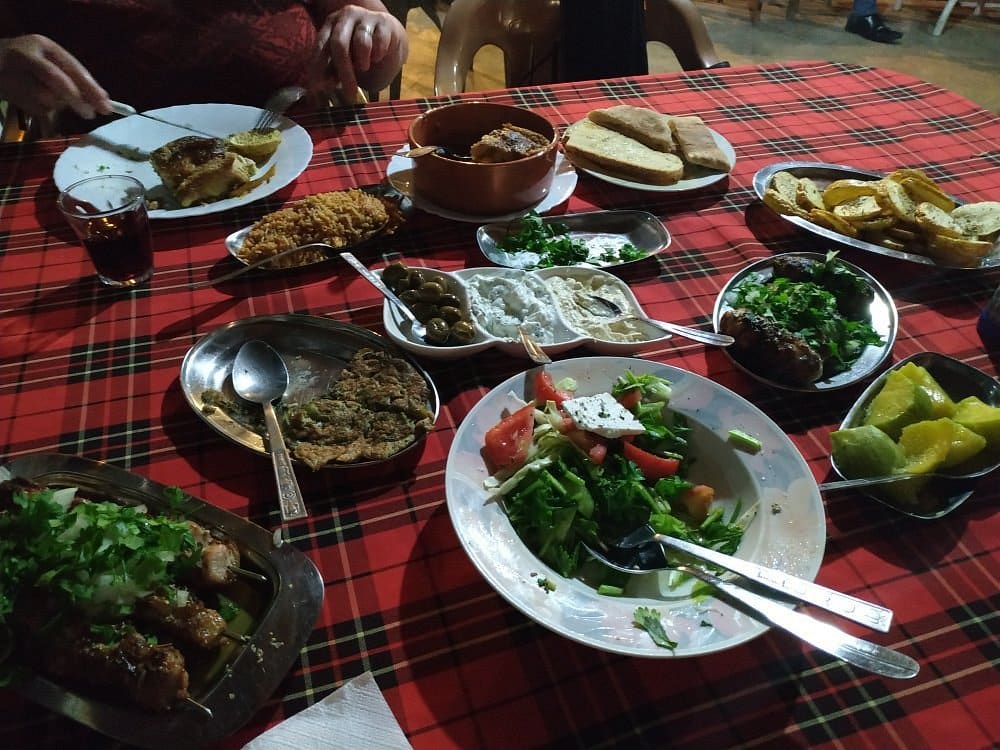
- Not a starter. It’s a whole meal of fifteen to thirty small dishes that arrive in waves over two hours or more. Dips and salads come first, then vegetables and cheese, then a long run of grilled and stewed meat or fish. Order it for the table and pace yourself, because the meat comes last and most first-timers are full before it gets there.
- Halloumiχαλλούμι
- The national cheese, made from sheep and goat milk, and the reason Cyprus is on most people’s culinary map. The clever thing about it is that it keeps its shape over heat, so you can grill or fry it until it squeaks. Eat it hot with lemon, or cold with watermelon on a summer afternoon. That’s better than it sounds.
- Souvlaσούβλα
- Large chunks of lamb, pork or chicken on a long skewer turned slowly over charcoal for hours. This is food for Sundays and celebrations, the centrepiece of Easter lunch, and quite different from souvlaki.
- Souvlakiσουβλάκι
- The smaller, quicker cousin: meat on a skewer, usually stuffed into a pitta with salad and sauce. Everyday food.
- Sheftaliaσεφταλιά
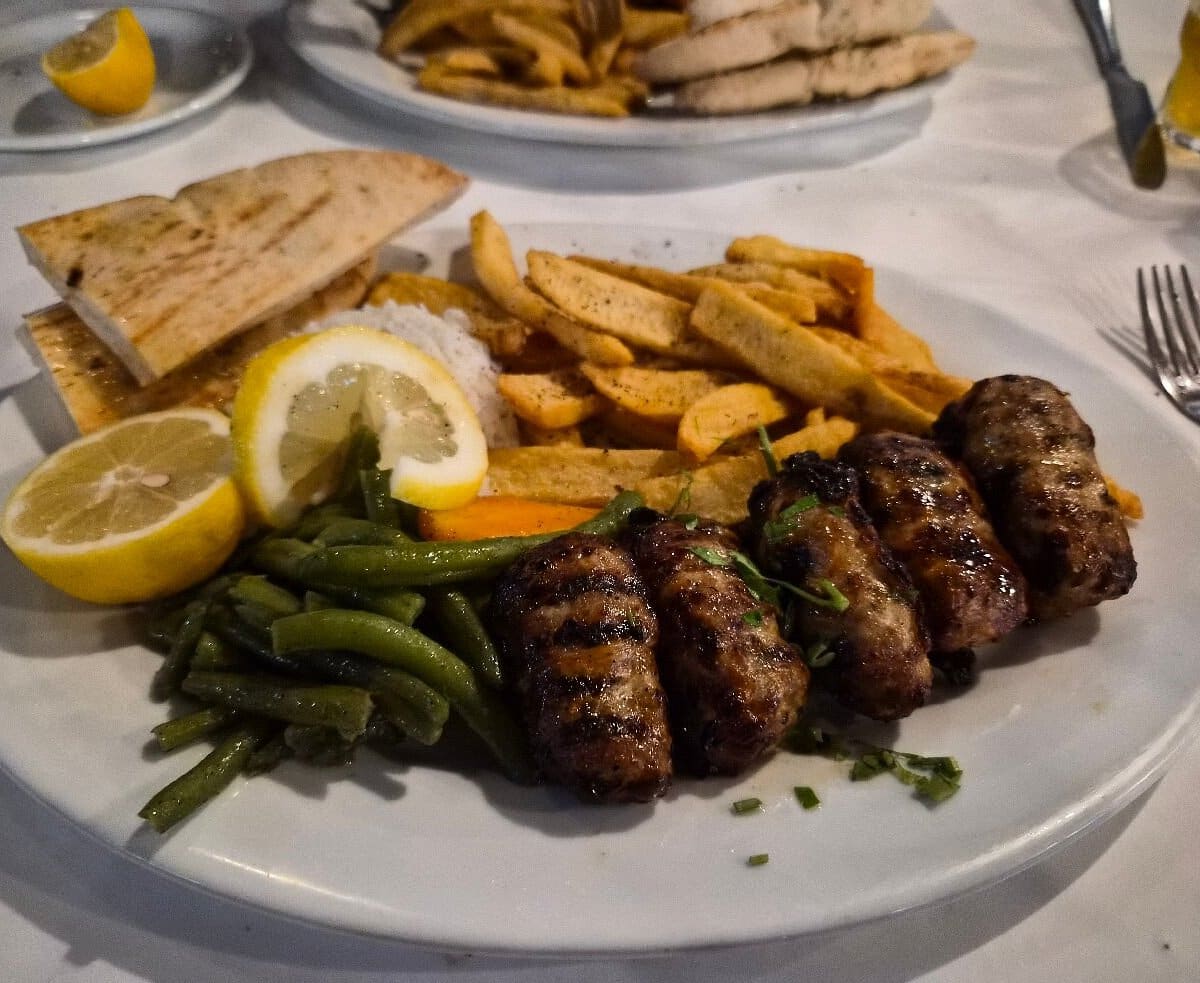
- Minced pork or lamb with onion and parsley, wrapped in caul fat and grilled. The fat bastes the meat as it melts. Often the best thing on a mixed grill.
- Kleftikoκλέφτικο
- Lamb sealed into a clay oven and left for hours until it collapses off the bone. The name means "stolen". The story goes that bandits cooked it in sealed pits so the smoke wouldn’t give them away.
- Afeliaαφέλια
- Pork braised in red wine with crushed coriander seed. Simple, and one of the most typically Cypriot flavours you’ll come across.
- Stifadoστιφάδο
- A slow stew of beef or rabbit with lots of small onions, red wine vinegar and cinnamon.
- Koupepiaκουπέπια
- Vine leaves stuffed with rice, mince and herbs. Elsewhere they’re called dolmades; here they’re koupepia.
- Louviλουβί
- Black-eyed beans, usually cooked with chard and dressed simply with olive oil and lemon. A Lenten staple and a dependable vegetarian choice.
- Lountzaλούντζα
- Smoked and wine-cured pork loin, sliced thin. Often grilled and served with halloumi.
- Anariαναρή
- The fresh whey cheese made alongside halloumi, mild and a bit like ricotta. Eat it fresh with honey, or dried and grated over pasta.
Dips, small plates and soups
- Tahiniταχίνι
- Sesame paste loosened with lemon and garlic. Locally it’s called tashi. It comes with the bread and doesn’t last long.
- Talattouriταλαττούρι
- The Cypriot take on tzatziki: strained yoghurt, cucumber, garlic and, unusually, mint instead of dill.
- Koupesκούπες
- Torpedo-shaped bulgur shells with a spiced minced-meat filling, deep fried. A meze regular.
- Trahanasτραχανάς
- A soup of cracked wheat fermented in soured milk, dried, then cooked back into a thick broth, usually with a cube of halloumi dropped in. Winter food, and an acquired taste that’s worth acquiring.
Sweet things
- Loukoumadesλουκουμάδες
- Small fried dough balls soaked in syrup or honey and dusted with cinnamon. Festival food.
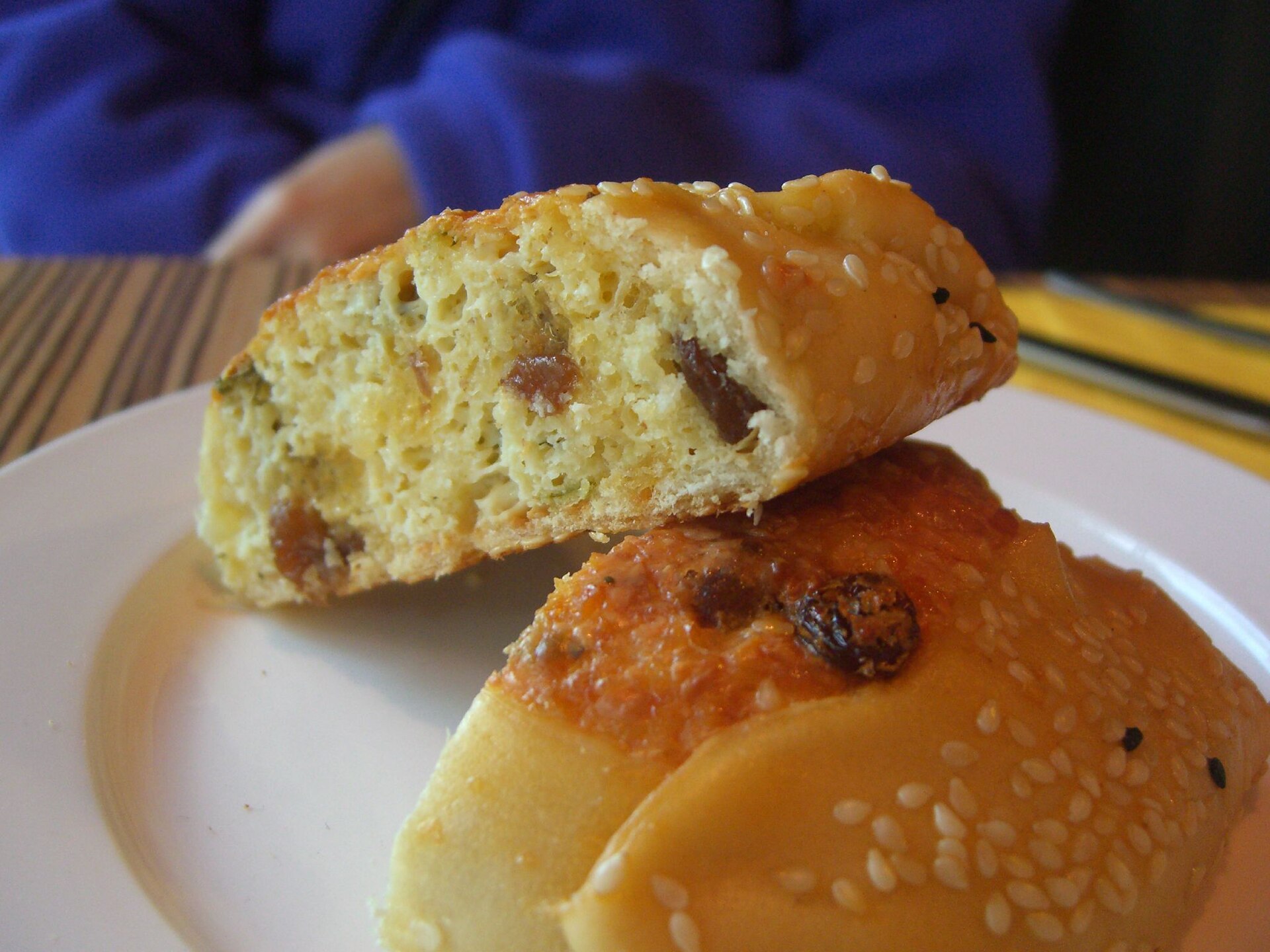
- Flaounesφλαούνες
- Savoury-sweet cheese pastries with mint and raisins, made only at Easter, and in huge quantities.
- Glyko tou koutaliouγλυκό του κουταλιού
- "Spoon sweets": whole fruit or nuts preserved in thick syrup, served on a little dish with a glass of cold water. If someone offers you one in a village home, say yes.
- Soutzoukosσουτζιούκος
- A string of almonds dipped repeatedly in thickened grape must until it builds up into a long, chewy candle. You’ll see it at every festival.
- Bourekiaμπουρέκια
- Small pastries filled with sweet anari cheese and cinnamon, fried and dusted with sugar.

To drink
- Cypriot coffeeκυπριακός καφές
- Finely ground, brewed in a small pot, served with the grounds settled at the bottom. Order it by how sweet you like it: sketo (no sugar), metrio (medium), glykos (sweet). Leave the last mouthful.
- Frappé
- Instant coffee shaken with ice into a foam. Unfashionable, everywhere, and just what you want at 35 degrees.
- Zivaniaζιβανία
- A clear, potent grape spirit distilled from pomace. You’ll be offered it as a welcome, after a meal, and traditionally as a cure for almost anything. Treat it with respect.
- Commandariaκουμανδαρία
- A sweet fortified wine from sun-dried grapes, made in Cyprus for thousands of years and often called the oldest named wine still being made. Drink it with dessert, not before dinner.
- Xynisteriξυνιστέρι
- The island’s main native white grape. Light and citrusy, and what most of the vineyards around Kathikas are planted with.
- Maratheftikoμαραθεύτικο
- A native red, deeper and fuller than most people expect from Cyprus. More and more, it’s the grape the serious local wineries want to be known for.
- KEO & Leon
- The local lagers. Cold, easy, and the right thing to drink on a harbour front.
A few local habits
- Dinner is late. 20:00 is early. Turn up at 19:00 and you'll find an empty room and a confused waiter.
- Lunch is long, and in summer it's the sensible way to spend the hours when it's too hot to be outside.
- Bread, olives and dips usually turn up without being ordered and are normally part of the cover charge.
- Tipping isn't compulsory. Rounding up, or 5–10% for good service, is normal.
- Village shops and coffee shops are often cash-only. Get cash out in Polis before you head up.
- Ask what's good today. Especially with fish. The answer tells you a lot about the restaurant.
Spellings and definitions vary between villages and between families, and this list is just one version. If I've got something wrong, or missed a local dish, please tell me.